CLV Demystified: Rethinking Closing Line Value from First Principles
When you are building better sports gambling strategies, closing line value, or CLV, is one of the first metrics you need to understand. It is not just a scorecard for whether a wager won or lost. It is a way to ask whether you consistently got a better price than the market eventually settled on when the most pregame information was available.
That distinction matters. Results are noisy. A great bet can lose, and a bad bet can win. CLV helps evaluate whether the decisions behind your bets are putting you in a position to profit over time.
But there is a problem with treating CLV as one universal number. The reference point matters. Did you beat the price at the sportsbook where you placed the wager? Did you get the best number available anywhere in the market? Or did you beat the market's no-vig estimate of fair odds? Those are different questions, and each tells you something useful about your process.
What Closing Line Value Actually Measures
At its core, CLV compares the odds you received with the odds available at market close. The closing line represents the market's final pregame assessment after it has absorbed injury reports, lineup news, sharp action, public action, and everything else known before the event begins.
Suppose you make a bet three hours before game time. Information continues entering the market after your wager is placed. That is why markets often move more aggressively when they first open and become more efficient as game time approaches, unless a specific piece of news forces a major adjustment.
If you consistently receive a better price than the final market, you have positive closing line value. Across a large enough collection of bets, that is a meaningful proxy for the quality of your process and your likely return on investment.
One bet does not tell you much. Ten bets still may not tell you much. What matters is the pattern across sports, markets, books, time periods, and bet types. Building better sports gambling strategies means evaluating the process in aggregate rather than overreacting to a single outcome.
CLV Is Useful, But the Market Is Not Omniscient
CLV is limited by what the market knows. If you are using an original model that captures something the market has not yet incorporated, the closing market may not fully reflect your true edge.
That can happen, but do not get arrogant about it. In a market filled with independent market makers, sportsbooks, prediction markets, offshore books, onshore books, and sharp bettors using their own models, useful information tends to find its way into prices. The market does not need to know why a sharp bettor is wagering. It only needs to recognize the action and adjust the number.
That is why closing prices remain a valuable benchmark over time. Even if you get to an insight first, sharp action and competing models often push the market toward a more reasonable price before close.
Think of a single model as a spotlight. It can illuminate a lot, but it also creates shadows. Multiple points of triangulation help you see opportunities more clearly. That same mindset is why one CLV number is not enough. We need multiple ways to understand what happened after a bet was placed.
The Five Flavors of Closing Line Value
The CLV collection breaks the measurement into five pieces: Venue CLV, Best CLV, Fair CLV, Best Delta, and Fair Delta. Each one answers a different question about timing, execution, price shopping, and the movement of underlying market truth.
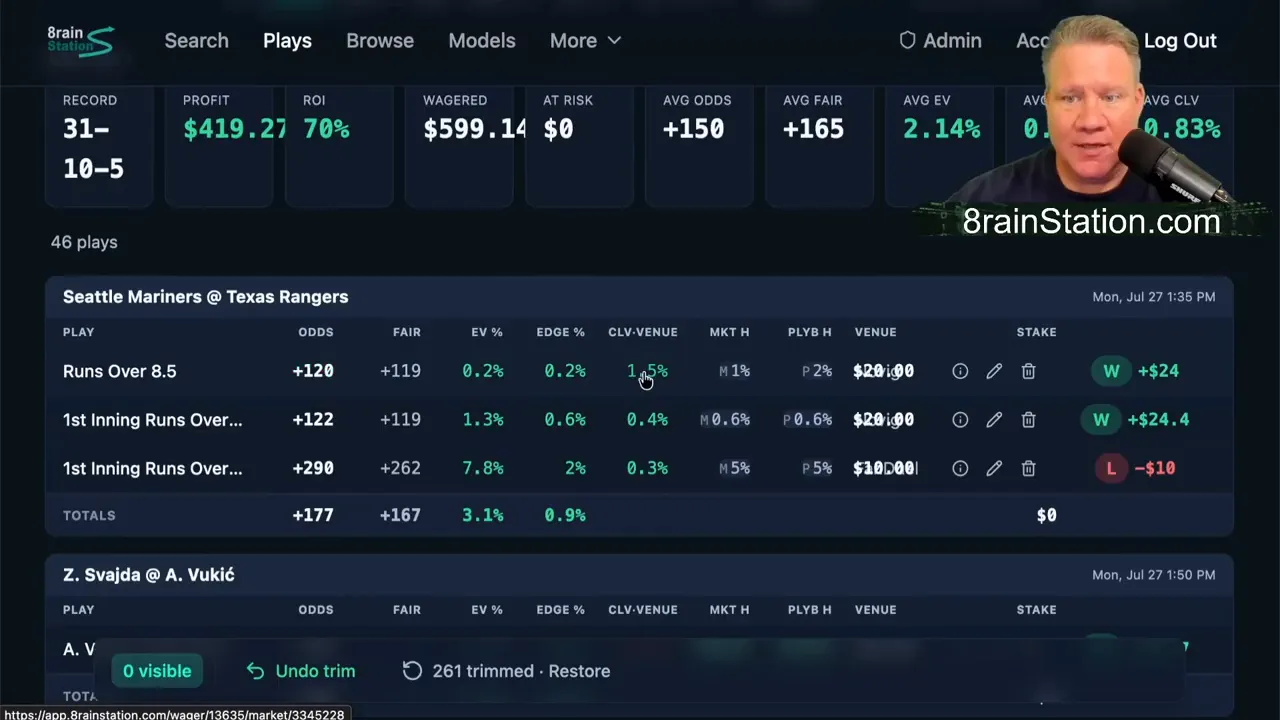
1. Venue CLV: Did You Time Your Execution Book Well?
Venue CLV compares the odds you received with the closing odds at the specific book or venue where you made the wager.
For example, consider a Seattle Mariners versus Texas Rangers play placed at +120. If the same venue closes at +113, you received seven cents of improvement relative to that venue's close. You timed that book well.
Venue CLV is valuable because it isolates your execution. It tells you whether you got the number before that specific sportsbook moved. When building better sports gambling strategies, this is how you begin separating strong timing from weak timing.
2. Best CLV: Did You Actually Get the Best Price in the Market?
Best CLV compares the odds you received against the best closing price available across the market. This is the price-shopping check.
In the same example, if you bet +120 and the best price at close was also +113, then Venue CLV and Best CLV are the same. You not only timed your venue well, you also got the best available market number.
But if the best available close were better than the number at your own book, it would reveal an execution issue. You may have had a valid bet, but you left value on the table by failing to find a better out.
This is especially important when using odds screens and positive EV tools. A wager can appear profitable at one sportsbook while another book is offering a better price. Some books frequently carry higher holds, so simply seeing a positive EV label is not the same as confirming you are executing at the strongest available price.
If Best CLV is consistently weaker than Venue CLV, ask practical questions:
- Do you need more books or venues available to you?
- Are you checking enough alternatives before placing a wager?
- Are you repeatedly betting at books with less competitive prices?
- Can your process identify the best executable price faster?
Price shopping is not glamorous, but it is one of the clearest ways of building better sports gambling strategies. For more context on stripping out sportsbook margin before evaluating opportunities, review why no-vig odds matter in positive EV betting.
3. Fair CLV: Did You Beat the No-Vig Market Estimate?
Fair CLV is the version most people mean when they casually refer to traditional CLV. It compares your entry price against the market's de-vigged, or no-vig, estimate of fair closing odds.
Using the Mariners example, a wager placed at +120 might have a fair closing price of +115 after removing vig from the market. That means the bet beat the market's fair estimate by five cents.
This is important because a sportsbook's displayed price includes margin. Fair CLV attempts to answer the deeper question: Did I get a price better than the market's implied probability of this outcome?
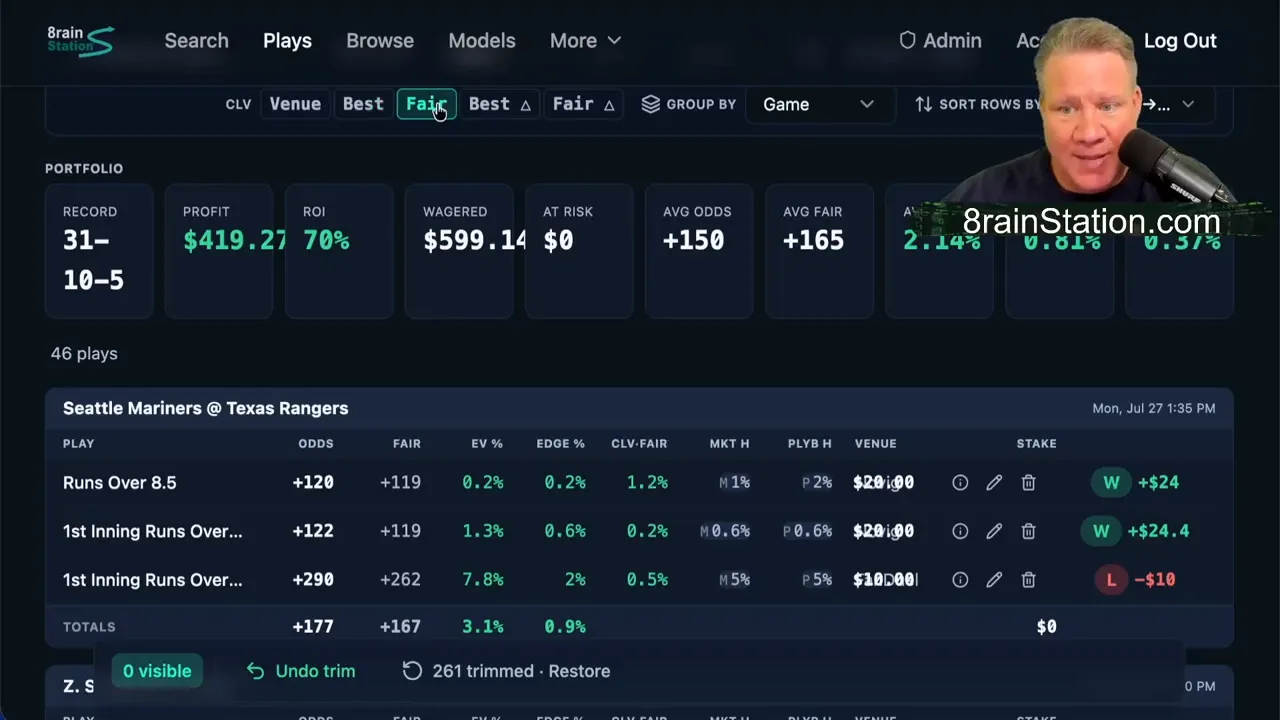
No one knows the exact true probability of a game. Fair CLV is not claiming certainty. It is the best market-based estimate available after removing the book's edge. That makes it particularly useful for analyzing whether your bets had market-based edge in aggregate.
There are many ways to de-vig odds. When searching for opportunities, a conservative worst-case de-vigging approach can make sense because you want a buffer before calling something positive EV. But when reviewing CLV after the fact across a large sample, using that same overly pessimistic method can materially understate the value you actually captured.
For Fair CLV, multiplicative de-vigging provides a more reasonable aggregate estimate of the two-sided market's implied probabilities. The technical label matters less than the purpose: use a methodology that gives a fair read on the overall pattern instead of artificially shrinking it.
4. Best Delta: What Happened to the Best Market Price?
Best Delta measures how the best available price changed from your entry point to the close. If you entered at the best number available, Best Delta should align closely with your Venue CLV because your venue was also the best market option.
This metric helps identify whether the market moved after your wager and how significant that movement was. It is an execution and market-movement lens, not simply a score.
5. Fair Delta: What Happened to Market Truth?
Fair Delta measures the change in the market's de-vigged fair estimate from entry to close. This can differ from Best Delta because the best displayed price may not move the same way that the market's underlying no-vig assessment moves.
For example, the best price in the market might not change dramatically, while Fair Delta moves by 2%. That suggests the market's underlying assessment of the matchup shifted further than the headline price alone would imply.
This is where the five-part framework becomes powerful. Large differences between Best Delta and Fair Delta can offer clues about whether you found:
- A price-driven edge caused by a stale or favorable book number
- A fundamental edge where the market's implied probability later shifted
- A market reacting to new information
- A changing liquidity environment as the market approached close
It will not always give a clean answer on an individual wager. The real value is in identifying repeated patterns. That is how building better sports gambling strategies becomes a disciplined feedback loop instead of a collection of hunches.
Use CLV to Learn, Not to Celebrate or Panic
The point of these metrics is not to give yourself a pat on the back after a win. You already know whether the wager won or lost. The question is what you should do differently tomorrow.
A winning bet can have poor CLV. A losing bet can have excellent CLV. Neither result alone proves much.
Losses are often the most productive bets to investigate. Ask:
- Did I make the right play for the right reasons?
- Did I get the best available number?
- Did the market move against me because of news that arrived after I placed the bet?
- Was the decision sound and the result simply variance?
- Is there a recurring hole in my price-shopping or market-selection process?
If a meaningful news event emerged after your bet, such as a report that an athlete was injured in warmups but still played, you may not have much to learn from the post-entry move. That information was unavailable when you acted. Put it in the proper bucket instead of rewriting history.
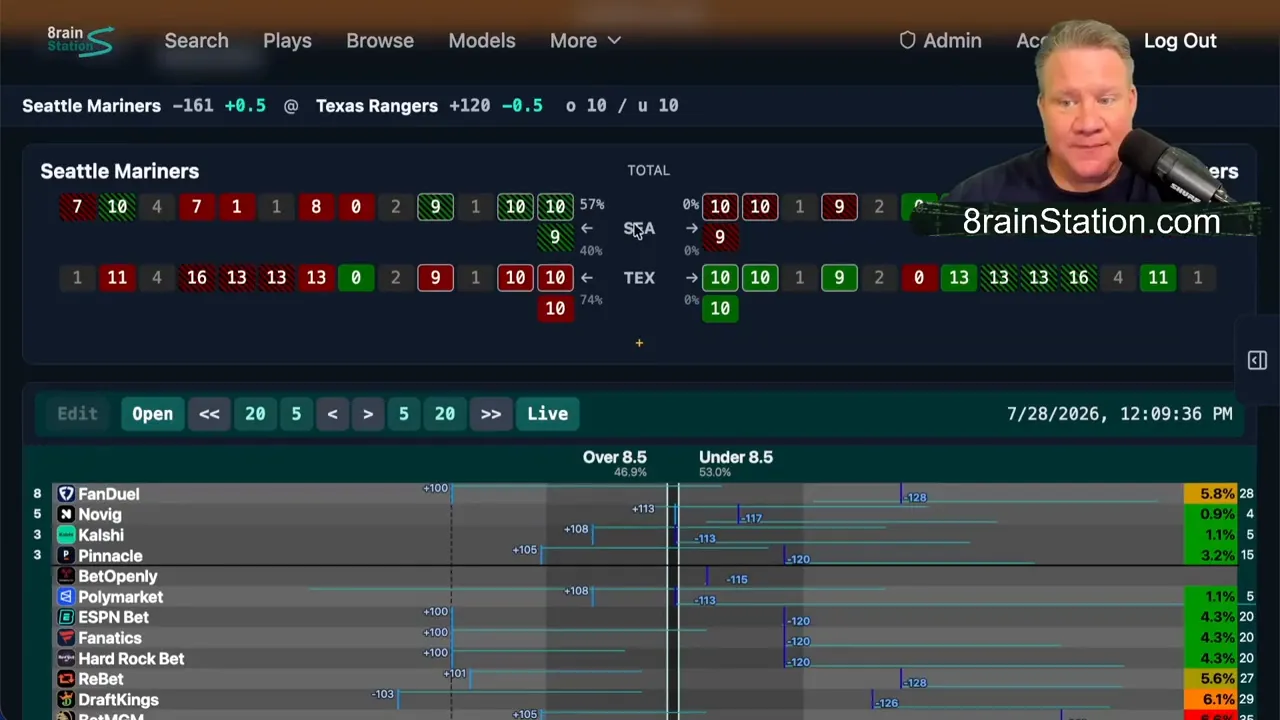
For the bets that do deserve a deeper review, inspect the price history and closing market. Seeing how the line evolved in time increments gives useful context that a single win-loss result cannot provide. The Bets Review workflow is built around exactly this kind of post-play analysis.
How to Build a Better CLV Review Process
A practical CLV routine does not require treating every wager like a forensic investigation. Start with aggregate trends, then drill down where something looks unusual.
- Track all five measures. Venue, Best, Fair, Best Delta, and Fair Delta give context that one number cannot.
- Review samples, not isolated bets. Look for patterns across enough wagers to reduce noise.
- Separate timing from price shopping. Positive Venue CLV with weaker Best CLV points to an execution problem, not necessarily a betting-selection problem.
- Use Fair CLV for market-based edge. This is the clearest view of whether your entry price beat the de-vigged closing market.
- Investigate meaningful deltas. Large movements may reflect fundamental information, technical pricing shifts, or market structure changes.
- Improve the controllable decisions. You control what you bet, where you bet, and when you bet. That is where the edge comes from.
One Number Is a Snapshot. Context Is an Edge.
Traditional Fair CLV remains incredibly useful. If you consistently beat the no-vig closing market, you have strong evidence that your decisions are creating value. But that is still only one snapshot.
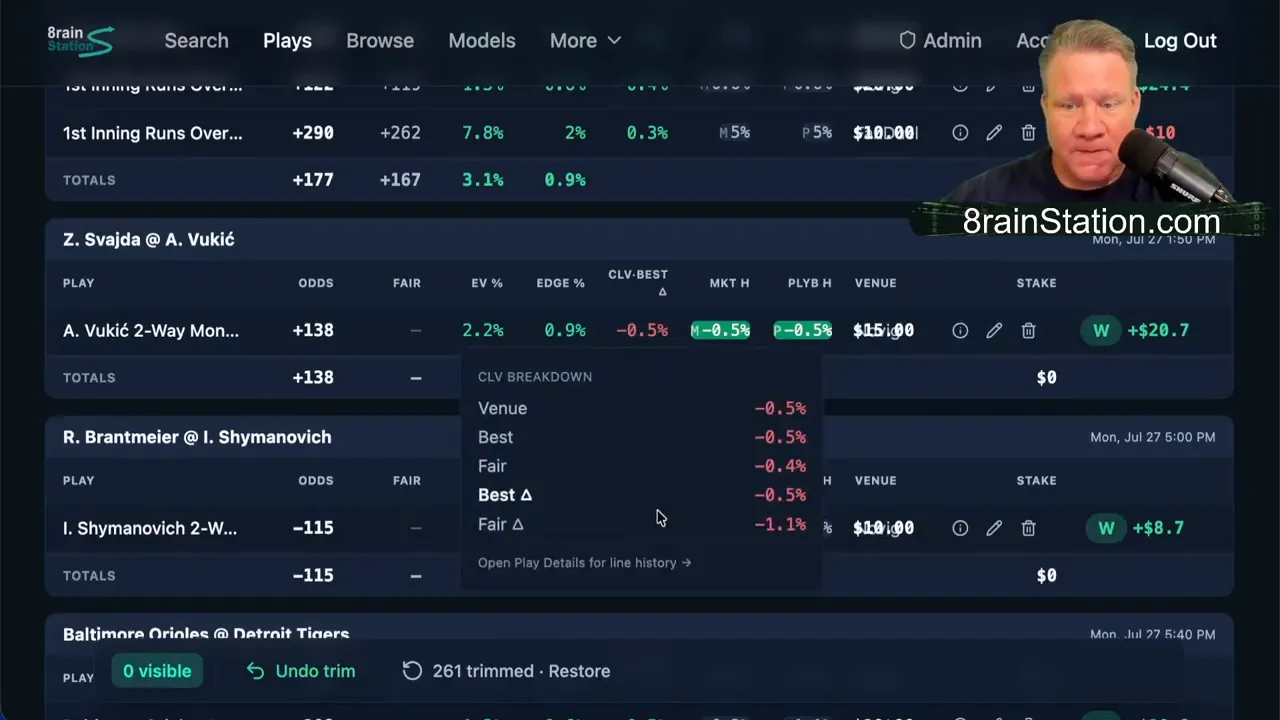
Venue CLV tells you whether you timed your book well. Best CLV tells you whether you price shopped well. Fair CLV tells you whether you beat the market's fair estimate. Best Delta and Fair Delta show what changed after you entered.
That context is the point. Building better sports gambling strategies is not about blindly following a metric. It is about using data to find leaks, understand market behavior, and improve your decisions one layer at a time.
The most valuable question is never just, “Did this bet win?” It is: What can this bet teach me about making better decisions next time?
Keep learning, keep reviewing the process, and keep looking for the small improvements that compound into real edge.