The Simplest Path to Advantage Sports Betting, Part 2
The Simplest Path to Advantage Sports Betting, Part 2
When it comes to building better sports gambling strategies, the first thing to accept is simple and a little uncomfortable. Most bettors are playing a game where everyone around them has better information, better tooling, and better process.
Sportsbooks know more. Market makers know more. Bots know more. Prediction markets are full of participants reacting in real time. If you want any real chance to win long term, building better sports gambling strategies has to start with creating an actual edge.
That edge does not come from vibes, headlines, or a gut feeling that you can outsmart the market. It comes from data, process, and learning how to use the right tools without turning your brain off. That is the real path forward.
This piece is about the simplest practical version of that path. Not the advanced stuff. Not the deep custom workflows. Just how to get started on day one and make better decisions than you made yesterday.
Why most bettors lose before they even begin
The mechanics of betting are easy. Pick a market, choose a side, place the wager. That part is not complicated.
The hard part is that the game is not designed to be neutral. Every line has hold built into it. Every menu is packed with options, many of which are priced in ways that punish weak decision making. Parlays, props, promos, boosted odds, peer markets, sweepstakes books, prediction exchanges, it all creates a giant buffet of choices. And if you choose badly often enough, the result is predictable.
That is why building better sports gambling strategies means rejecting the idea that raw intuition is enough. Maybe decades ago someone could scrape out an edge from newspaper clippings and team gossip. Today that is fantasy. You are competing against automation, pricing engines, and people who treat this like a quantitative game.
If you want to act like a sharp bettor, you have to become a student. That does not end after a week. It does not end after your first winning month. It lasts your entire betting career.
The simplest setup for getting started
The approach here uses 8rain Station as the working example, because it is built to make building better sports gambling strategies more practical from the start. The larger lesson matters even if you use a different tool. You need a system that helps you assess price, compare markets, and think in terms of edge rather than entertainment.
The good news is that the setup is simple. Before you run any searches, there are only two real tasks:
- Set your bankroll preferences
- Choose the books or betting outlets you can actually use
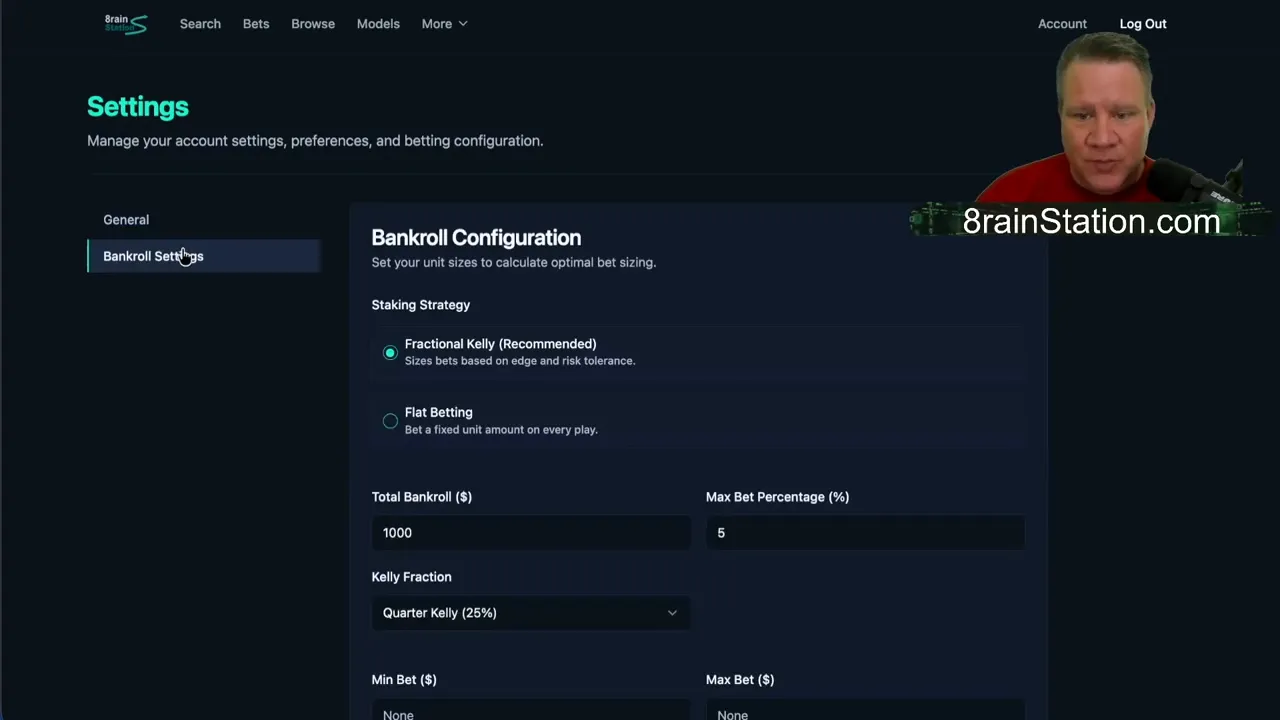
1. Set your bankroll first
This is not glamorous, but it matters. If your tooling does not know your bankroll, it cannot help you size bets sensibly.
A simple starting point is to enter your total bankroll and use a conservative Kelly-based setting. The recommendation here is not full Kelly or even quarter Kelly. It is a more restrained fraction, around 15%, to keep bet sizes modest while you learn.
The point is not that Kelly is perfect. It is not. In fact, it is not ideal for every sports betting situation. But for beginners it gives you a rational framework for controlling risk and reducing the odds of going broke while you build experience.
If you want a deeper breakdown of how this works in practice, this guide on bet sizing with the Kelly Criterion is worth reading.
Round your bets like a normal human
One subtle but important recommendation is to round your bet sizes. At minimum, round to the nearest dollar. If your bankroll is larger, rounding to the nearest five dollars can make sense.
Why?
Because oddly specific bet amounts can signal that you are using calculated staking. If you show up with wagers like $12.13 or $27.84, that can make you stand out in the wrong way. Books notice patterns. And once they start viewing you as sharp, that label tends to stick.
This is part of the broader game. Building better sports gambling strategies is not just about finding value. It is also about understanding the environment you are operating in and not volunteering unnecessary information.
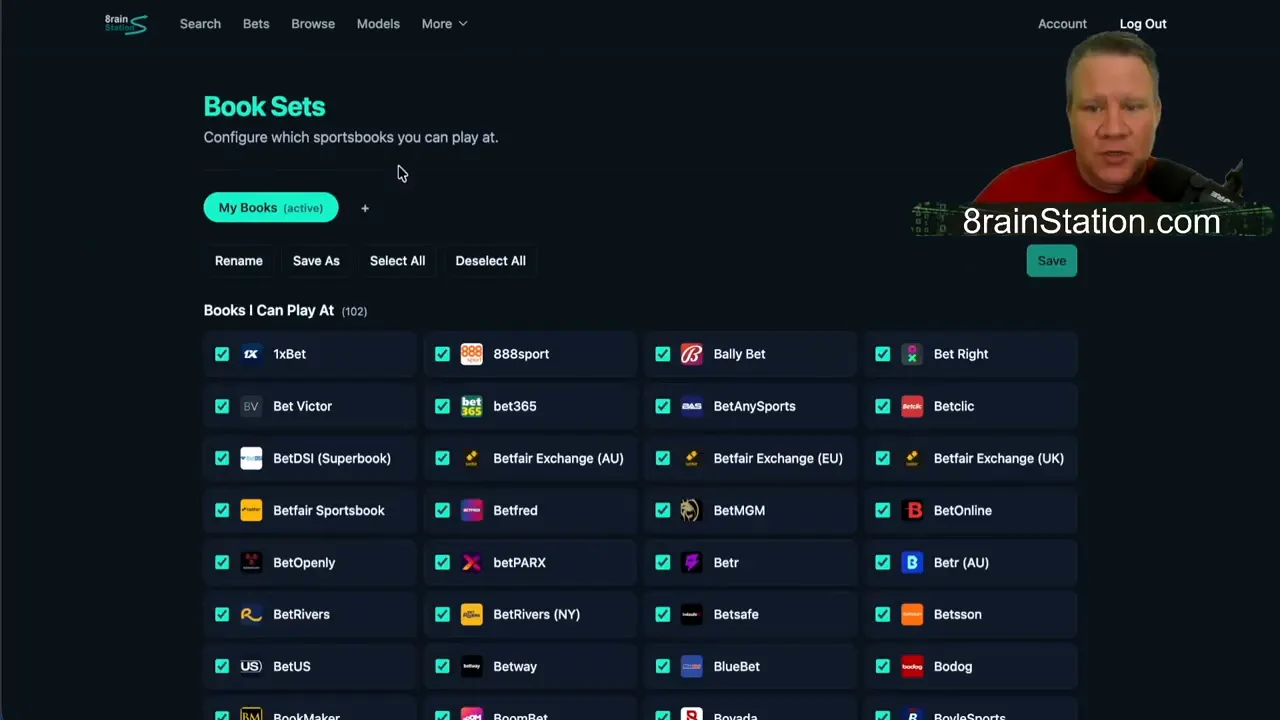
2. Choose your available books
The second setup step is selecting the places where you can actually place bets. That might include books like DraftKings, FanDuel, Bet365, or other locally available options. It can also include prediction markets or sharper books depending on where you live and what access you have.
The basic principle is this: the more outs you have, the better.
If you only have one place to bet, you are stuck with one price. If you have several, you can shop the market and catch stale or generous numbers. That is one of the simplest and most powerful habits in all of sports betting.
Sharper books like Pinnacle or Circa can also be useful reference points, even if they are not always where you make the bet. Sometimes they offer the signal. Another book offers the opportunity.
Start with one-click searches, not complexity
After bankroll settings and book selection are in place, the goal is not to immediately become a market wizard. The goal is to use a simple search structure to identify stronger plays than you would have found on your own.
That is where one-click searches come in.
Instead of staring at endless odds boards and guessing, you can begin with a top-down view that surfaces candidate plays based on the type of edge you want to hunt.
That is one of the cleanest ways of building better sports gambling strategies because it teaches you to start from market structure rather than personal bias.
Plus money coin flips
The first favorite category here is what can be thought of as plus money coin flips.
This means two things are true at once:
- The market is treating the outcome like roughly a 50 50 proposition
- You can get paid plus money if your side wins
That is naturally interesting because your payout is larger than your risk while the market still sees the event as close to even.
These searches are often a great starting point because they can reveal either:
- A straightforward value play
- A crossover where both sides can be played for arbitrage
How to think about a plus money coin flip
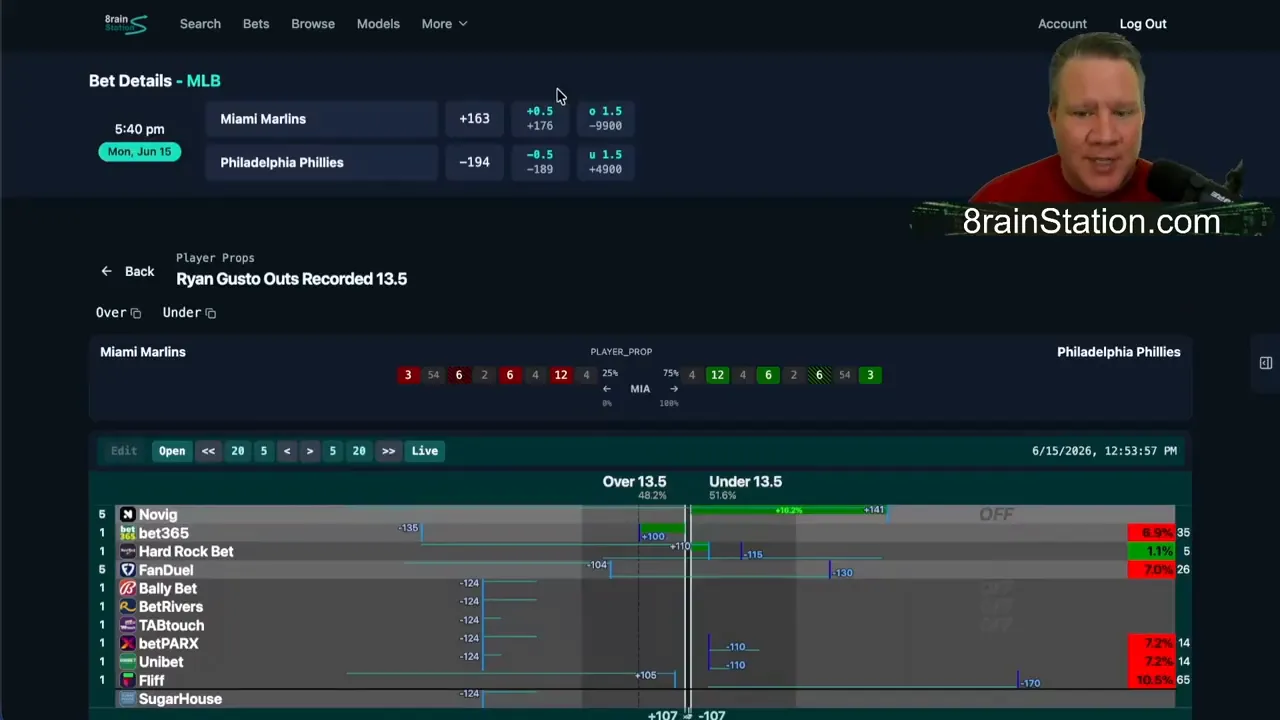
One example discussed was a player prop under. That matters because unders often carry a built-in behavioral edge. Recreational bettors tend to gravitate toward overs. They want action, scoring, and upside. That can leave unders priced a little more favorably than they should be.
So right away, a plus-money under can be worth attention. Not because every under is good, but because it starts from a more favorable behavioral backdrop.
Then comes the key step: compare the prices across the market.
If one book is hanging even money while the broader market is charging a premium on that same side, that mismatch stands out. If another outlet is simultaneously offering a generous price on the other side, you may not even have to choose a side. You may be looking at an arbitrage.
That is a huge shift in thinking. Instead of asking, "Who do I like?" you ask, "What is this price telling me?"
If you want a more detailed walkthrough of that style of opportunity, this article on arbitrage betting with 8rain Station is a natural follow-up.
Prediction markets can create weird openings
Another useful wrinkle is how prediction markets behave.
Unlike a traditional sportsbook with one central pricing engine, a prediction market can reflect many independent actors posting or reacting at different speeds. That can create moments where part of the market has already moved while one stale or aggressive price is still sitting there.
When you see the broader market shifting one way and an outlier price hanging back, that deserves a closer look. Sometimes someone is simply late. Sometimes the market is fragmented. Either way, stale pricing can be useful if you are paying attention.
Use more than one top-down lens
One of the smartest points in the whole framework is that there is more than one way to win. A lot of software acts as if there is only a single correct output. Find biggest number, click biggest number, done.
That is too crude.
Different strategies need different perspectives. Plus money coin flips help one way. Another search might focus on main lines versus sharp books. Another might combine model output with market pricing. Good process means looking at the market through more than one lens.
Sharp main markets
The next category highlighted is sharp main. These are main line plays, not player props, that show positive expected value when compared against a collection of sharper books.
This matters because main markets usually carry more liquidity and can often provide cleaner signals. You are not just hunting random price blips. You are comparing your available books against a stronger market baseline.
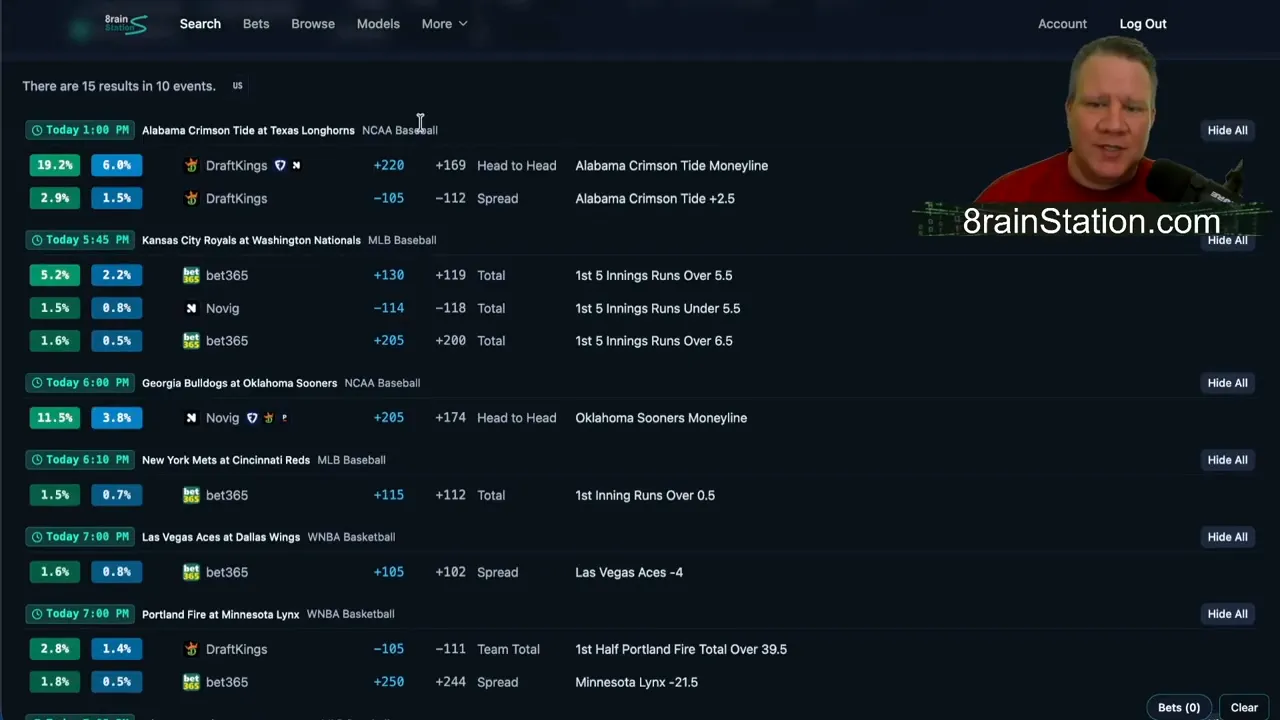
For example, a spread on a WNBA game might only show a modest edge, maybe something like a low single-digit expected value. That does not mean it is automatically a smash play. It means the price is better than the market baseline and might be worth consideration, especially if it matches other things you trust.
That distinction matters. A number can be interesting without being irresistible.
When an over can still be the sharp side
One especially useful example involved a first inning baseball total going over a hook. This is a good reminder that public bias does not work the same way in every market.
Normally, overs attract public attention. But in a first inning run market, many casual bettors assume starting pitchers are at their freshest and that six outs will pass quietly. That can actually suppress appetite for the over.
In that case, an over price that already looked strong from a top-down comparison became even more interesting because it also lined up with a market that had been especially profitable.
This is where building better sports gambling strategies starts to become more powerful. You are not relying on one signal. You are triangulating:
- Top-down price comparison
- Historical market behavior
- Potential model agreement
- Line shopping across books
When multiple signals converge, the play becomes more compelling.
The best mindset shift: do not hunt for action, wait to be convinced
This might be the most important lesson in the entire discussion.
Do not wake up thinking you need to find 20 bets.
That is backwards.
The right approach is to be comfortable keeping your money in your pocket until the market shows you something that looks too good to ignore. You want to be sold on the wager. You want the number to convince you.
That sounds simple, but it changes everything. It keeps you selective. It lowers forced volume. It helps you avoid turning betting into a chore of constant action.
Building better sports gambling strategies is really about becoming a better investor in odds, not a better collector of tickets.
Curiosity is a real edge
You do not have to inspect every play deeply. Sometimes the number is strong enough that the decision is straightforward. But the real growth happens when you stay curious.
If a line is far away from the rest of the market, ask why.
If one book repeatedly hangs softer prices in a certain league, notice it.
If a market keeps surfacing in your search results and also grades well in your models, investigate it.
That kind of curiosity is not just a personality trait. It is part of the edge. It is how you move from using a tool to developing original strategy.
Customize your weighting and stop following the herd
Another smart concept here is adjusting the weighting of the books you trust when building your market reference.
Maybe you start with a default sharp global weighting. Fine. That is a practical starting point.
But over time, you might notice that one source has become less useful, less reliable, or less representative. If so, change it. Remove it. Reduce its influence. Build your own version.
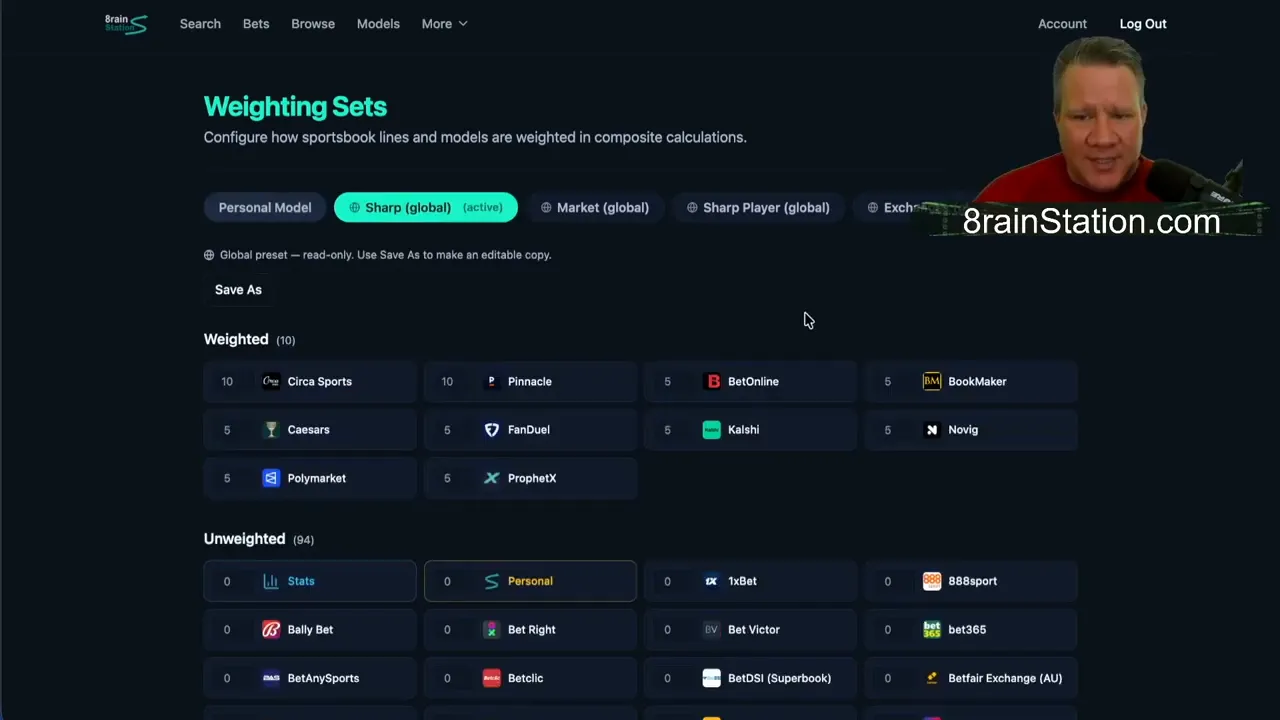
This is a major part of building better sports gambling strategies because the moment you begin tuning the system to your own observations, you stop racing in the exact same lane as everybody else.
That matters. If everyone is using the same settings, seeing the same plays, and clicking the same numbers, the edge erodes faster. But when you adapt the workflow based on evidence, you can uncover angles that last longer.
Markets change. Books change. Edges decay. Customization helps you stay ahead of that curve.
Triangulation is where good strategy becomes great strategy
A price edge by itself can be enough. But the strongest process usually involves stacking signals.
That means asking questions like:
- Does the market price look strong relative to sharp books?
- Does a model agree with the side?
- Does historical context support the angle?
- Is there line movement backing up the idea?
- Can I find a better number somewhere else?
When you start combining those layers, your decision making gets sharper. That is exactly the kind of thinking behind stats alignment for stronger betting strategy, where market perspective and empirical analysis work together instead of competing.
Start simple, then turn the knobs
The beauty of a good tool is not that it spits out picks and asks you to obey. It is that it gives you a structured way to learn.
At first, that might mean:
- Setting bankroll rules
- Choosing your books
- Running one-click searches
- Playing a few arbitrage spots
- Taking a few top-down value plays
Then, once that feels familiar, you start turning the knobs.
Change the filters. Adjust the thresholds. Experiment with weighting. Narrow the market types. Track what keeps showing up. Learn what fits your style.
A good analogy is an audio equalizer. You are not changing the song itself. You are tuning the sound so it fits what you want to hear. That is what better tooling should do for your betting process.
This is not about spoon-fed picks
If all you want is a feed of selections to tail blindly, you are missing the point.
The real value is not in being handed a bet. It is in learning why something is priced the way it is, why it may be mispriced, and how to combine information into better action. That is what actually lasts.
Software can do a lot of the heavy lifting. It can surface opportunities faster than you can manually find them. But it cannot decide your long-term process for you. It cannot replace judgment. It cannot replace skepticism. It cannot replace curiosity.
Building better sports gambling strategies means using technology as leverage, not as a substitute for thinking.
The bigger payoff is not just money
Yes, betting results are measured in dollars. That is the scoreboard. But the deeper value here is the habit of disciplined, data-driven decision making.
Once you get used to forming hypotheses, acting on them, reviewing outcomes, and improving the process, that skill starts showing up elsewhere. In work. In finance. In any domain where the quality of your decisions matters.
That feedback loop is powerful:
- Observe the market
- Form a hypothesis
- Take action
- Review the result
- Adjust the process
Repeat that often enough and you are not just making bets. You are training judgment.
A practical starting checklist
If you want the simplest possible action plan for building better sports gambling strategies, use this:
- Enter your bankroll and use conservative sizing
- Round your wagers to avoid unnecessary pattern signaling
- Select every book or market you can reasonably access
- Start with one-click searches
- Look first at plus money coin flips and simple arbitrage spots
- Move into sharp main markets once you understand the screen
- Do not force volume
- Let the price convince you
- Stay curious when something looks out of line
- Customize your process over time instead of copying everyone else
Keep learning, keep questioning
The simplest path is not a shortcut. It is just the cleanest on-ramp.
You start with sound bankroll rules. You use the books you have. You search intelligently. You compare prices. You learn what a real opportunity looks like. Then you keep refining.
That is how sharp bettors are built.
If you want to explore the platform behind this workflow, you can check out 8rain Station. And if you want to work through questions, trade ideas, or learn alongside other serious bettors, the community at the 8rain Discord is the right place to do it.
The point is not to chase some lazy get-rich fantasy. The point is to learn the real game, play it with discipline, and keep developing an edge that comes from process instead of impulse.
That is the simplest path. And if you take it seriously, it is also the most powerful one.