Simpler than You'd Think - A Portfolio Manager Approach to Advantage Sports Betting
When people talk about sports betting, they almost always talk about picks. One play. One lock. One best bet. That mindset is exactly why so many people stay stuck.
Building better sports gambling strategies is not about chasing individual bets. It is about having edge across your full set of bets and managing your bankroll the way a portfolio manager manages capital. You are not just firing. You are allocating. You are investing. You are managing risk.
That sounds more complicated than it really is. The good news is that building better sports gambling strategies can start with a very simple daily process. Set up your bankroll. Define where you can actually bet. Find strong opportunities. Build a proposed portfolio. Prune it down. Then execute in an organized way.
Stop thinking in picks and start thinking in portfolios
The classic bad habit in sports betting is this:
- Find a play
- Make a play
- Find another play
- Make another play
That approach feels productive, but it rarely leaves you with a coherent risk profile. You may end up overloaded in one game, overexposed to one book, or undercapitalized on your best opportunities.
A better framework is to treat the day as a capital allocation problem. You have a bankroll. You have a set of opportunities. Your job is to decide how to put that money to work today, knowing that tomorrow the board resets and you do it again.
That is the heart of building better sports gambling strategies. Not random action. Structured action.
The one time setup that makes everything else easier
Before you can build a smart betting portfolio, you need two things configured correctly.
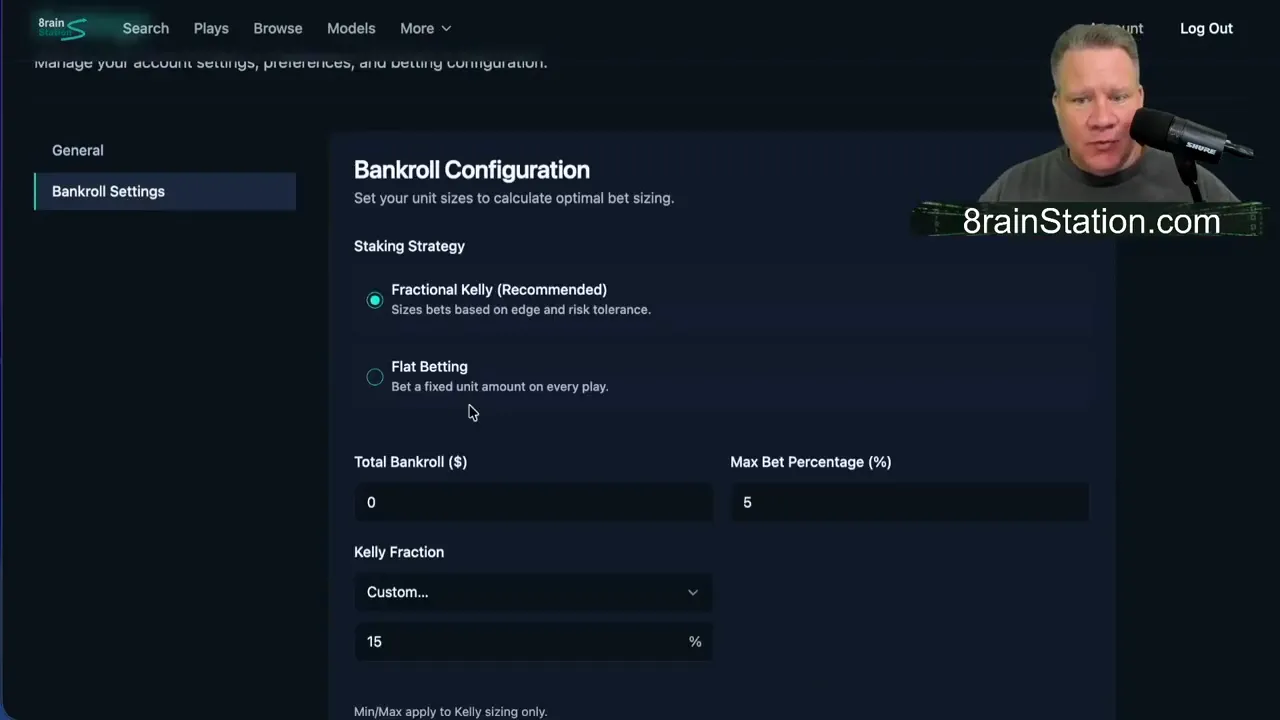
1. Set your bankroll
The first step is simple. Enter the amount you actually have available to bet with. In the walkthrough, the example bankroll is set to $500, and bet sizing is based on the Kelly Criterion.
This matters because once bankroll settings are in place, your recommended bet sizes can be generated automatically. That turns sizing from a guess into a process.
If you want a deeper look at that side of risk management, this breakdown of bet sizing and the Kelly Criterion is worth reading.
2. Set the books where you can actually play
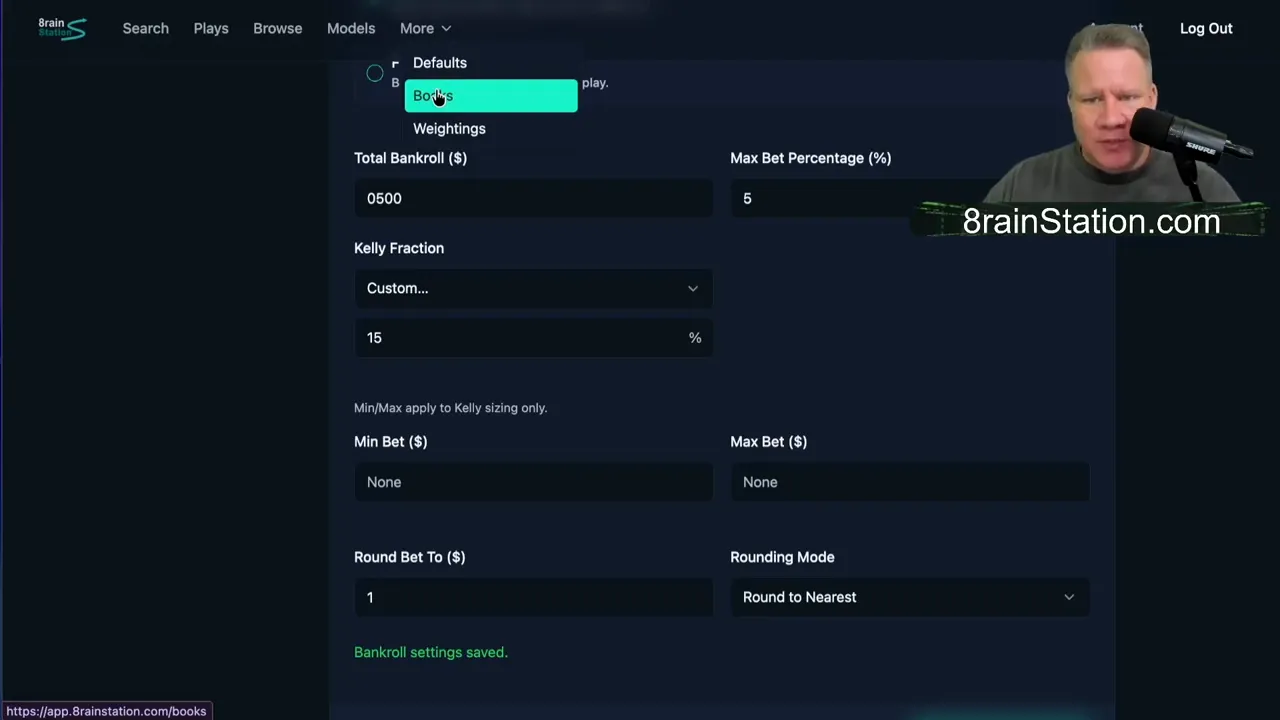
The second step is just as important. Define the sportsbooks where you can place bets.
That sounds obvious, but it is critical. If a tool shows you great information from books you cannot use, that information may be interesting but it is not actionable. The real question is not what exists. The real question is where can I execute.
In the example, the usable books are FanDuel, DraftKings, and Bet365. That is enough to start. If you also have access to exchanges, sweepstakes books, prediction markets, or lower hold books, you can add those too. The point is not to have every account on earth. The point is to define the venues where you can make real decisions.
Once those two steps are finished, the setup is basically done. From there, the daily process becomes repeatable.
The daily workflow for building better sports gambling strategies
After setup, the process is very straightforward:
- Find plays using a few proven searches
- Add them to a proposed portfolio
- Prune the portfolio to fit your daily risk target
- Sort by book and execute efficiently
- Track results and learn from them
That is it. That is the skeleton of building better sports gambling strategies on a daily basis.
How to find plays without overcomplicating it
There are plenty of advanced tools and model driven approaches available, but starting simple is a strength, not a weakness.
The easiest place to begin is with one click searches that scan for top down opportunities. These are the classic advantage gambling searches that look at market information, sharp book signals, and outlier pricing to identify playable bets.
The walkthrough uses three examples.
Plus money coin flips
This search looks for near 50 50 outcomes where you are still getting plus money. Those spots can be powerful because a small pricing advantage can be enough to create profitability over time.
These are attractive because they combine familiar bet profiles with visible edge. If the true outcome is close to a coin flip but the payout is better than it should be, that is exactly the type of small but meaningful mispricing you want to notice.
Sharp main lines
This search compares your playable books against sharper books on main lines and looks for outliers. In plain English, it asks where the sharper market is signaling one thing while a softer book is hanging a vulnerable number.
That is one of the cleanest ways to identify edge without needing to build a full model from scratch.
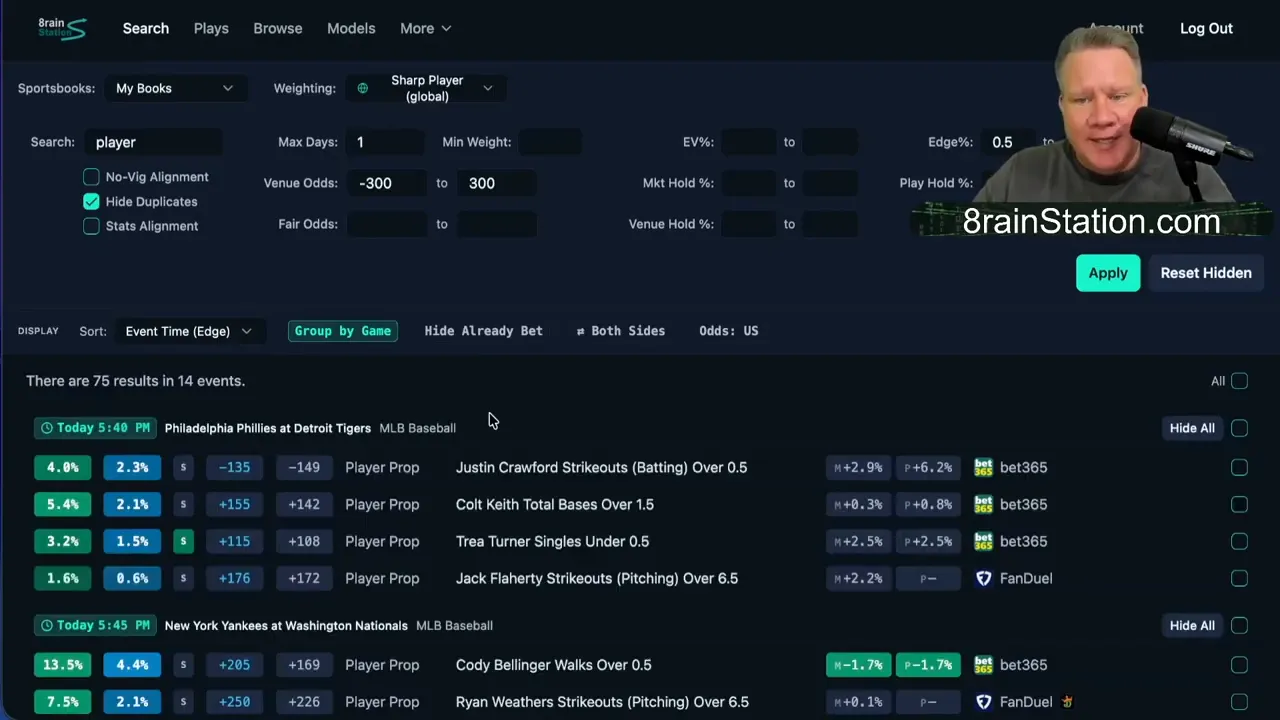
Player props
Player props can generate a lot of results, so this is where a small filter adjustment helps. In the example, the initial player prop search returns too many plays, so the edge threshold is tightened from a lower cutoff to roughly 3 percent. That reduces the list to a much more manageable set.
This is a good lesson. You do not need to max out every search. You need results that you can actually work with.
There is also a models page available, and model driven plays can often show even larger edges. But starting with top down searches alone is enough to build a workable process. Keep it simple first. Complexity can come later.
Add first, judge second
One of the best parts of this approach is that you do not need to overanalyze each search result in isolation. Run a search. Add the full list. Run another search. Add that list too. Then step back and evaluate the collection.
That order matters.
If you judge each play one by one before seeing the whole board, you fall back into pick mode. But if you gather a wide set of opportunities first, you can make strategic decisions from a portfolio perspective.
That is a major shift in building better sports gambling strategies. The individual bet still matters, but the collection matters more.
Prune the portfolio until it fits your risk
Once the proposed portfolio is full, the real work begins. Not hard work, just smart work.
You review the list and start trimming.
Maybe a prop feels too thin. Maybe you do not like betting walks. Maybe one game has too many correlated totals. Maybe a market is technically positive EV but too obscure for your taste. Maybe you simply do not want more than 20 bets in a day.
That is all valid.
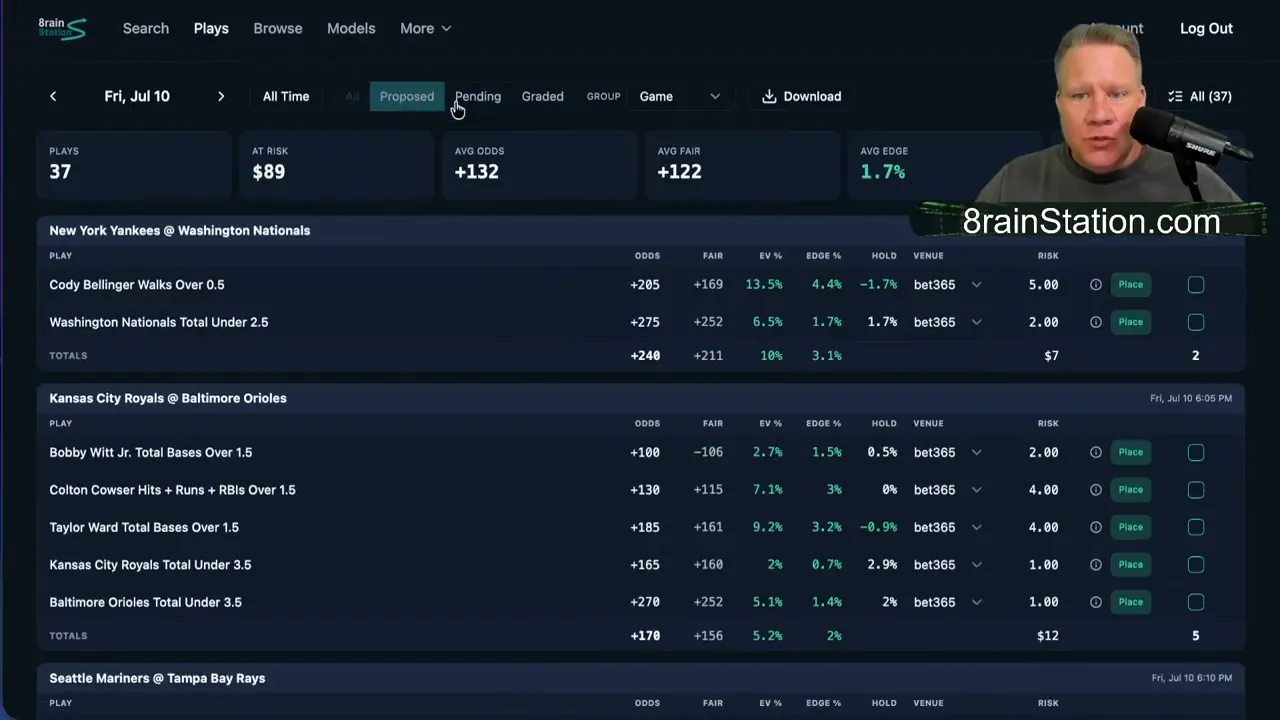
The point is not to keep everything. The point is to shape the group into something coherent.
Some examples of practical pruning decisions from the walkthrough:
- Passing on a walks prop because it is not a market worth guessing on
- Reducing a stack of similar totals to one preferred number
- Keeping a stronger coin flip angle and removing the rest from the same game
- Dropping obscure quarter lines that do not fit the daily plan
- Preferring a slightly lower edge on a more likely outcome over a more aggressive longer shot
This is where your judgment starts to blend with the data. The tool helps identify possible edge. You decide what belongs in the final portfolio.
If you like this capital allocation mindset, it lines up closely with betting sports like a portfolio manager, which is exactly the mental model serious bettors should be using.
Use portfolio metrics to evaluate the whole picture
Once the list is trimmed, you can evaluate the portfolio at a higher level.
You are not just asking whether a single bet looks good. You are looking at things like:
- How many total plays you have
- How many events are represented
- What your average odds profile looks like
- How implied win probability compares to projected likelihood
- How much risk you have tied to one book or one market type
That broader view helps you avoid building a portfolio that looks good in pieces but poor as a whole.
This is another big part of building better sports gambling strategies. A portfolio is not just a pile of good bets. It is a coordinated risk structure.
Execution gets dramatically easier when you sort by venue
Once the decision work is done, execution should be fast.
This is where sorting by venue becomes a huge advantage. Instead of bouncing from one sportsbook to another every time you place a bet, you organize the portfolio by book. Then you open one book, place all bets there, move to the next book, and repeat.
It is basically a shopping list.
You already made the decisions. Now you just work through the list efficiently.
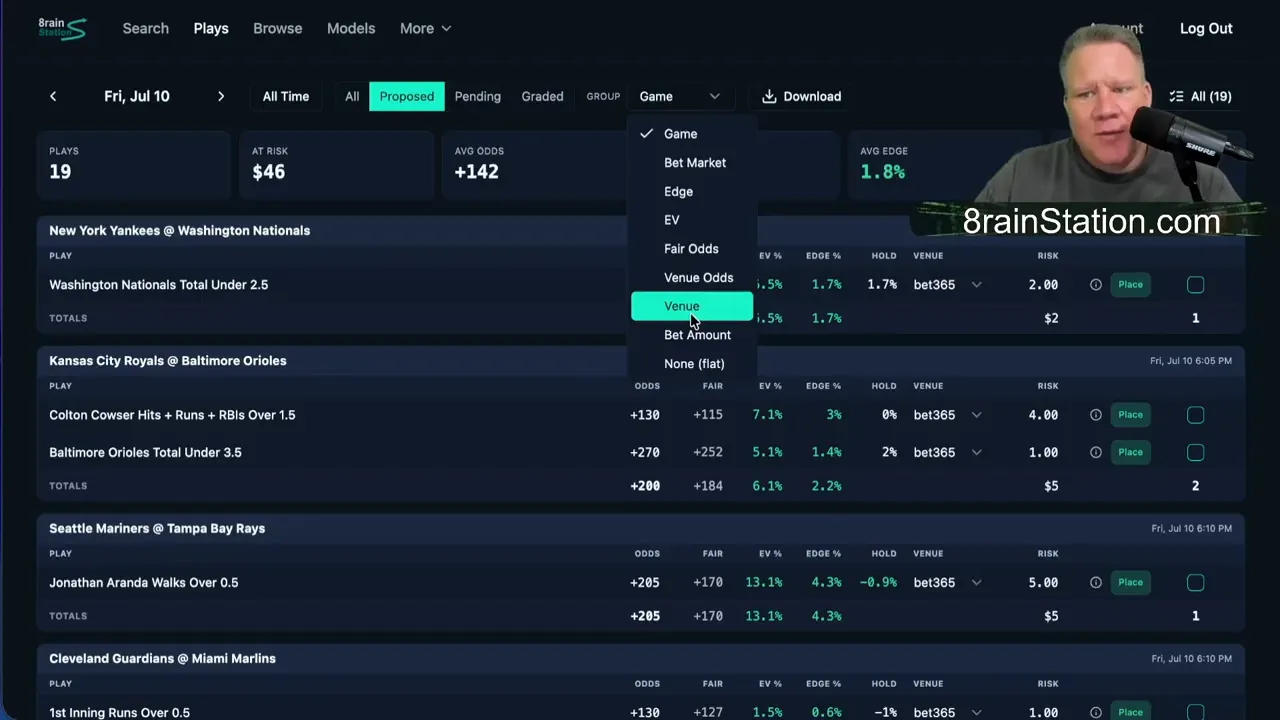
This may sound like a small operational detail, but it matters a lot. If you are making multiple bets per day, workflow friction adds up. The easier it is to execute cleanly, the more likely you are to stick to your process.
A smarter way to build parlays
Parlays are often treated as random entertainment. They do not have to be.
If one of your books is promotion heavy, like a same sport boost or baseball promo on Bet365, you can use your existing portfolio to build a parlay in a quantified way.
Instead of hunting for legs from scratch, you can:
- Sort by venue
- Find the bets already flagged as worthwhile at that book
- Select a few of the strongest candidates
- Build the parlay from that pre filtered list
That is much better than forcing together random legs because a promotion exists.
If parlays are part of your betting mix, this guide to understanding parlays in sports betting gives useful context on how to think about them more clearly.
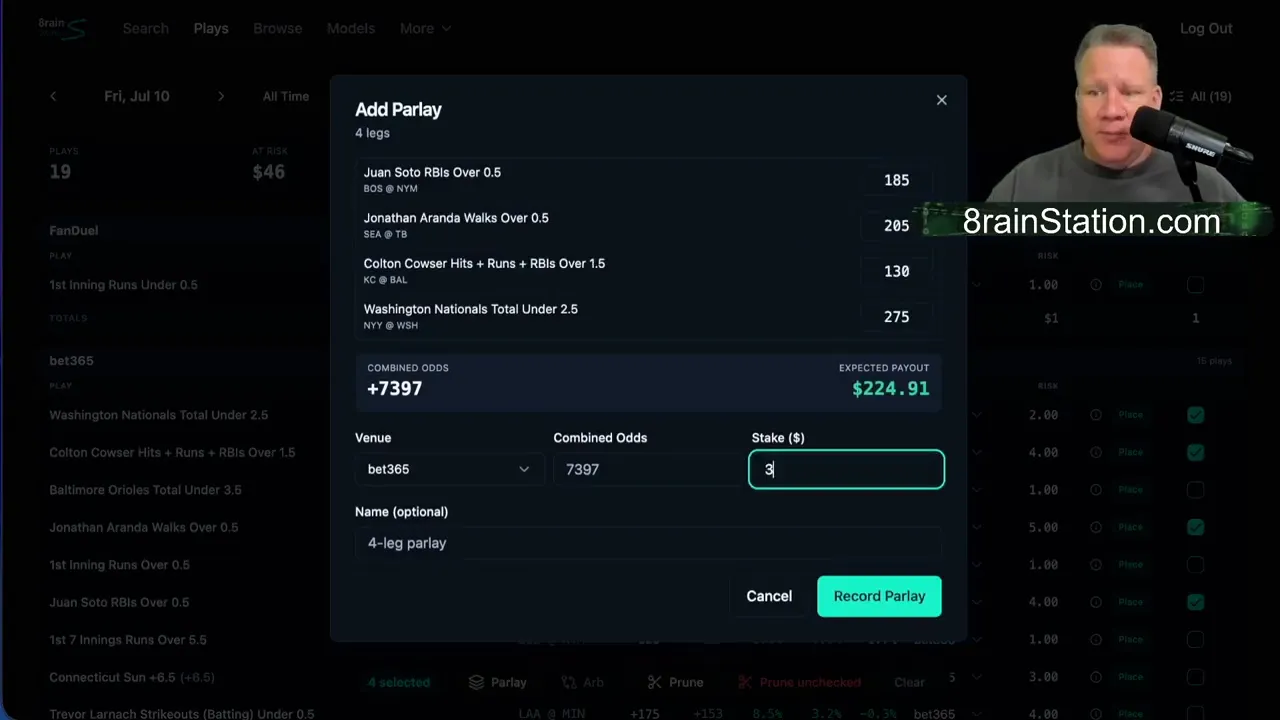
The key is timing. Build the parlay after you have already created the strategic portfolio, not before. That keeps the parlay as a structured extension of your process instead of an impulsive detour.
Record what you actually played
After the bets are placed, record them.
This is another place where serious bettors separate themselves from the crowd. If you do not track what you did, you cannot prove what works, diagnose what fails, or refine your process over time.
Recording also lets you adjust for real world execution. If you got a better number than expected, great. If the line moved and the new price killed the edge, maybe you pass. The process is flexible because it is grounded in actual decisions, not fantasy fill prices.
That is essential for building better sports gambling strategies. Strategy without records is just storytelling.
Why manual control matters for grading
There is an important warning here. Be careful with tools that connect directly to your sportsbook account and pull your betting history automatically.
That kind of convenience can come with information risk. If a sportsbook knows exactly what sharp workflow or external tool you are using, that may not be great for your long term survivability.
A better approach is to use game results to support grading while keeping the bettor in control. In some markets, especially player props, you still need to verify context like whether a listed starter actually started. That is a small price to pay for maintaining clean control over your own data.
The real edge is in strategy development
The betting process itself is not the destination. It is the engine that drives strategy development.
That is why this method matters so much. It gives you a simple way to start, but it also gives you a structure that can grow with you. You can begin with bankroll settings, book selection, and a few one click searches. Later, you can layer in more advanced filtering, deeper modeling, custom weighting, and more nuanced portfolio construction.
But the foundation stays the same.
- Find edge
- Assemble opportunities
- Manage collective risk
- Execute efficiently
- Track results
- Learn and improve
That cycle is what building better sports gambling strategies really looks like in practice.
The mindset that actually works
Sports gambling gets a bad reputation partly because so many people are playing the wrong game. They think the game is predictions. Or locks. Or someone else feeding them picks.
It is not.
The real game is edge, process, discipline, and learning. If you come at it with the mindset of improvement, you can get much farther than people who are still hunting for an easy button.
That is why community matters too. The right environment is not just about access to tools. It is about people who are trying to learn, test, compare notes, and get sharper together.
If you want to explore that environment, you can check out 8rain Station or join the free Discord community.
The simple version to remember
If you want the whole approach condensed to its essentials, here it is:
- Set your bankroll
- Set the books where you can actually bet
- Run a few high quality searches
- Add the results to a proposed portfolio
- Prune the list until the risk fits your day
- Sort by venue and place the bets efficiently
- Record results and keep learning
That is the framework. That is the discipline. And that is why a portfolio manager mindset is so powerful.
Building better sports gambling strategies is simpler than most people think. It just requires treating the work like capital allocation instead of content consumption.